
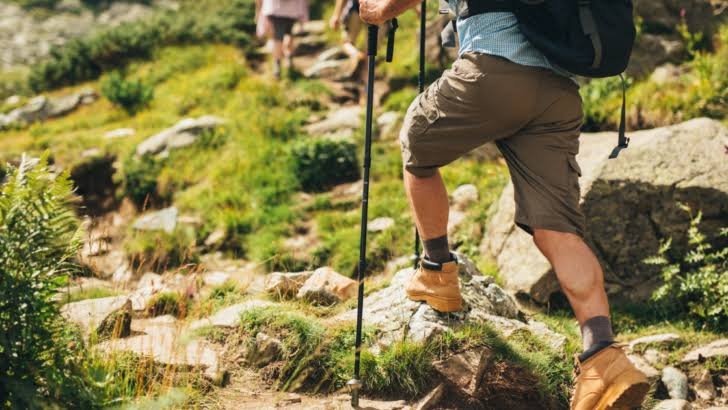
Hitting the trails for a backcountry trek, mountain hike, or multi-day wilderness adventure demands physical resilience. For active adults, outdoor terrain presents unique physiological challenges: uneven footings, steep elevation changes, heavy backpack loads, and prolonged cardiovascular exertion.
Proper physical preparation prevents common trail injuries like rolled ankles, knee strain, and lower back fatigue. Preparing your body for rugged terrain requires focusing on joint stability, eccentric muscle strength, core conditioning, and active recovery.
1. Strengthen the Decelerators: Eccentric Quadriceps Conditioning
Quick Answer: Focus on eccentric leg exercises—like slow goblet squats, step-downs, and reverse lunges—to build quadriceps strength that absorbs downhill impact and protects knee joints.
Most hikers assume that climbing uphill is the hardest part of a trek. Physiologically, however, going downhill inflicts far more structural stress on the lower body. Downhill walking subjects your quads and knees to intense eccentric contractions, where muscles lengthen under heavy loads.



Without targeted eccentric conditioning, prolonged downhill descents cause microscopic muscle tears and joint inflammation, leading to “hiker’s knee” (patellofemoral pain syndrome).
Incorporate eccentric leg strengthening for trail stability twice a week to build resilient legs that handle steep mountain descents effortlessly.
2. Mobilize Ankles and Stabilize Hips for Uneven Terrain
Quick Answer: Improve ankle dorsiflexion and gluteus medius strength using band stretches and single-leg balance drills to prevent rolled ankles on loose trail cobble.
Lush forest floors and rocky switchbacks require constant lateral adjustments from your feet and hips. If your ankles lack flexibility, your knees and lower back absorb the rotational shock instead, increasing injury risk.
- Ankle Dorsiflexion Stretches: Kneel facing a wall and drive your knee forward over your toes without lifting your heel to increase mobility.
- Band-Resisted Clamshells: Strengthen the gluteus medius to keep your knees aligned when stepping onto elevated rocks or logs.
- Single-Leg Balance Drills: Stand on a foam pad or balance disc for 60 seconds while holding a light weight to strengthen stabilizing ankle ligaments.
Prioritizing joint mobility exercises for hikers creates a stable foundation that adapts instantly to shifting trail surfaces.
3. Core Conditioning for Backpack Load Carriage
Quick Answer: Train your core with anti-rotational exercises like suit-case carries, pallof presses, and planks to maintain spinal alignment under heavy pack weight.
Carrying a 20-to-40-pound backpack shifts your center of gravity backward and upward. If your core muscles are weak, your spinal posture collapses, forcing your lower back muscles to overwork and fatigue rapidly.
Traditional crunches fail to prepare your torso for trail demands. Instead, focus on anti-rotational and isometric core stability movements. Loaded farmer’s carries and single-arm suitcase carries train your deep abdominal wall and obliques to keep your spine erect while marching under heavy loads.
4. Cardiovascular Preparation: Zone 2 Endurance and Weighted Step-Ups
Quick Answer: Build sustainable aerobic capacity through low-intensity Zone 2 cardio paired with high-volume weighted box step-ups that mirror real climbing conditions.
Mishandled pacing causes early trail exhaustion. Building a strong aerobic base allows your cardiovascular system to burn fat efficiently while keeping your heart rate manageable on steep inclines.
- Zone 2 Aerobic Base: Spend 70% of your training time doing low-intensity cardio (brisk walking, rowing, or cycling) where you can comfortably hold a conversation.
- Weighted Step-Ups: Perform 300 to 500 weighted step-ups on a 12-to-18-inch box while wearing a 15-pound pack to simulate elevation gain directly.
5. Prioritize Active Recovery and Off-Trail Rest
Quick Answer: Speed up tissue repair between training sessions and multi-day hikes using dynamic movement, contrast therapy, hydration, and quality sleep.
Conditioning is only half of the equation; your muscles grow stronger during rest. Active recovery keeps circulation moving, removing metabolic waste and delivering nutrients to repairing muscle fibers.
Incorporate active recovery protocols for outdoor athletes such as foam rolling, light swimming, and dynamic mobility flows on non-training days. When planning extended wilderness hiking trips, choosing comfortable accommodations makes a massive difference.
For instance, ending a rugged backcountry trek at a peaceful bear lodge in Alaska gives your body access to comfortable beds, nourishing meals, and relaxing spaces needed to recover fully between outdoor excursions.
6. Myth vs. Fact: Trail Fitness Edition
- Myth: Running on a treadmill is enough to prepare for mountain trails.
- Fact: Flat treadmills lack the lateral instability, uneven foot placements, and steep downhill eccentric stresses found on real dirt trails.
- Myth: Stretching before a hike prevents injuries.
- Fact: Static stretching right before a hike relaxes muscles, temporarily reducing power and stability. Opt for dynamic warm-ups (leg swings, arm circles, lunges) before stepping onto the trail.
- Myth: Heavy boots eliminate the need for ankle strength.
- Fact: Stiff boots offer external support, but relying on them exclusively weakens intrinsic foot and ankle muscles over time.
7. The 4-Week Trail Readiness Checklist
Use this simple planning checklist in the month leading up to your next outdoor trip:
- [ ] Week 1: Establish baseline Zone 2 cardio (3x weekly) and begin basic eccentric leg training.
- [ ] Week 2: Add single-leg balance work and loaded core carries with a light pack.
- [ ] Week 3: Complete a 3-hour practice hike on hilly terrain wearing your full gear weight.
- [ ] Week 4: Taper training intensity by 50%, prioritize sleep, and focus on ankle mobility.
Frequently Asked Questions
How long does it take an active adult to get in shape for a major hiking trip?
For active adults with a baseline fitness level, 6 to 8 weeks of targeted strength, mobility, and weighted pack training provides adequate physical preparation for multi-day treks.
How can I prevent knee pain when hiking downhill?
Focus on eccentric quadriceps exercises during gym prep, shorten your stride length when descending, and use adjustable trekking poles to absorb up to 20% of the impact force off your knees.
Preparing your body for the trails is an investment in your safety, endurance, and overall outdoor enjoyment. By strengthening your quads for downhill descents, mobilizing your ankles, stabilizing your core under load, and honoring active recovery, you build a resilient, trail-ready body capable of conquering any mountain horizon.