
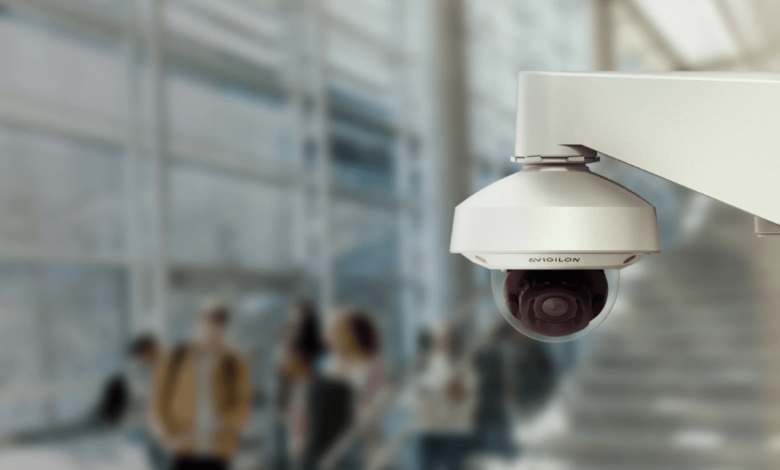
Surveillance systems for commercial purposes have gone through major changes and do not look the same as today’s systems. For a long time, security meant setting up a few fixed cameras, recording everything, and later on, hoping the footage would be useful. The initial systems had a very limited role. They were after-the-fact proof but did not help in any way in the incident’s prevention.
This method has now become obsolete as commercial spaces have become more sophisticated. Besides, technology has advanced a lot. Consequently, the new commercialization of surveillance systems has opened up a whole new world of possibilities far beyond the use of basic CCTV. They have become quicker, smarter, and more than just a part of the daily operations.
It has been the improvement of the technology that has enabled the movement from mere visual covering to the total understanding of what is going on and the immediate acting on it.
Moving Beyond Simple Video Recording
The traditional CCTV systems were passive in nature and by design as well. The camera would keep on recording all the time, and only a person would watch the tape when something went wrong. This was the reason for the slow and often frustrating investigations, as hours of footage of no importance had to be scanned to get to a few important moments.




However, the modern commercial surveillance systems are opposite. They are not just designed to record but to detect the activity right as it happens. These systems not only keep the video but also analyze it in real-time, highlighting the events that are important.
For instance, an alert can be sent to the staff when a door is opened after hours, someone is staying too long in the restricted area, or movement is detected in a place where no one is supposed to be. In this way, the teams can react instantly rather than take actions later. Active monitoring has completely replaced the passive recording method, and this has led to the security concept in the minds of business people.
Clearer Images and Smarter Hardware
Camera quality is one of the most overt changes that have affected commercial surveillance systems. In most professional settings, grainy and low-resolution footage has been nearly eliminated as an acceptable norm. The cameras of today are able to produce clear images that give access to important details even in the most difficult lighting conditions.
High-definition and ultra-high-definition cameras are now a standard in the market, and others come equipped with features like wide dynamic range, infrared night vision, and automatic light adjustment, among others. Such advancements have become a necessity in places like parking lots, loading docks, and warehouses, where lighting can be tricky the whole day.
In recent times, certain cameras have become integrated with processing power on the same board. This feature enables them to perform fundamental analysis independently and not completely depend on a central server. The data is processed at the source, which results in quicker response times and lower network loads. Moreover, the improved hardware contributes to the generation of more accurate information and the capture of fewer details lost.
How Video Analytics Changed Surveillance
Video analytics is a significant breakthrough in the field of modern commercial surveillance systems. It is a technology relying on software to analyze video and recognize patterns or actions.
Security personnel no longer have to be glued to their screens all the time, as they will be notified only when the system detects something amiss. Some of the situations that could prompt an alert include unauthorized entry, a rapid increase of people in a place, or monitoring of restricted areas.
Manufacturers, retailers, and other customer-oriented businesses will find the analytics feature of counting people, detecting their movements, and seeing how long they remain in particular spots very useful. In the case of office or factory premises, it can help in the ruling out of fire hazards and accidents through the implementation of safety precautions. Video surveillance has thus become more efficient and less tiring due to reduced human intervention, and also, analytics have developed a great number of ways in which businesses can utilize video data on a daily basis.
Connected Systems That Work Together
In the past, CCTV systems would often be used as isolated units and would not communicate with each other. The cameras would capture the images, the access control systems would record the entries, and the alarms would sound, but the different systems wouldn’t really exchange information at all.
The latest commercial surveillance systems have been designed in such a way that they can easily work with other security tools and vice versa. The integration of such systems not only results in a clearer but also a more comprehensive view of the site’s activities. Such a high degree of collaboration not only saves time but also increases the quality of the investigation and enhances the response capability during the incident. At the same time, it minimizes the risk of human error to a great extent.
Remote Access and Cloud-Based Management
Another important change is the way surveillance systems are managed and accessed. The majority of modern commercial surveillance systems prefer cloud-based or hybrid storage to traditional on-site equipment only.
Cloud access enables the authorized people to see the live feeds and recorded footage from nearly anywhere. This certainly proves to be a great advantage for the owners of businesses who are in charge of many locations or, in fact, are not always able to be on-site.
They also lessened the maintenance burden on cloud-based systems. The automatic application of software updates, security patches, and feature improvements is done without interrupting the normal operation of the system. As a result, systems are kept up-to-date without the need for continuous manual effort. Security is continually considered, and top-notch providers encrypt and impose access limitations to keep the video data safe.
Easier Expansion and Long-Term Flexibility
Previously, the process of enlarging a surveillance system was a costly and intimidating one. The installation of new cameras frequently necessitated the procurement of new hardware, installation of more wiring, and the overall reconfiguration of the system.
The surveillance systems of today’s commercial world offer the option of scaling up according to the needs of the business. The addition of new cameras along with their associated features can be done quite frequently with little effort. The use of centralized dashboards allows for the management of multiple locations from just one interface. This characteristic is very useful for companies that are expanding, for temporary locations, or for companies that are changing their layouts frequently. A scalable system not only saves the original investment but also makes it easy to make adaptations as the needs change. The surveillance system must be capable of developing along with the business and should not be the one setting the limitations.
Supporting Daily Operations
Today, commercial surveillance systems do more than protect property. They also support daily operations and planning.
Retailers use video data to understand customer behavior, improve store layouts, and plan staffing levels. Warehouses and factories use surveillance to monitor workflows, improve safety compliance, and reduce downtime. Offices use it to manage access and understand space usage.
These insights come from the same cameras that provide security coverage. The difference is how the information is used. When handled responsibly, surveillance data can help businesses operate more smoothly and make better decisions. Security and efficiency are no longer separate goals.
Respecting Privacy and Building Trust
As surveillance technology becomes more advanced, privacy concerns naturally increase. Businesses must use commercial surveillance systems responsibly and transparently.
Modern systems often include features that support privacy, such as masking sensitive areas, limiting who can access footage, and setting clear data retention periods. Clear policies and visible signage help people understand how surveillance is used.
Following local laws and regulations is essential. Just as important is building trust with employees and customers by using surveillance for legitimate purposes only. Responsible use ensures that security improvements do not come at the cost of respect or fairness.
Conclusion
From being just basic recording devices, commercial surveillance systems have grown into effective security solutions that actively work along with HD and IP cameras, artificial intelligence (AI) based analytics, and centralized monitoring. Businesses can detect risks earlier and at the same time react with better measures.
A properly designed system acts differently from just recording video. It aids in the daily operations, grows together with the business, and makes the security planning for the long term stronger. Moreover, as technology keeps progressing, the creative and smart surveillance systems will always be the ones that let the organizations remain ready and at the same time, be invisible in their locations.
In the event that you are preparing to set up a new Commercial Surveillance System or want to improve the current one, it is always good to consider smarter choices. The advanced commercial surveillance systems designed, installed, and supported by Resolute Partners are built with your environment, scale, and security goals in mind.
Ask for an assessment recommendation today so that you can have a conversation with an expert, examine your existing system, and find out how a contemporary surveillance solution can offer safety, visibility, and operational control benefits throughout your company.